Tunis, Tunisia
Mar 11, 2025
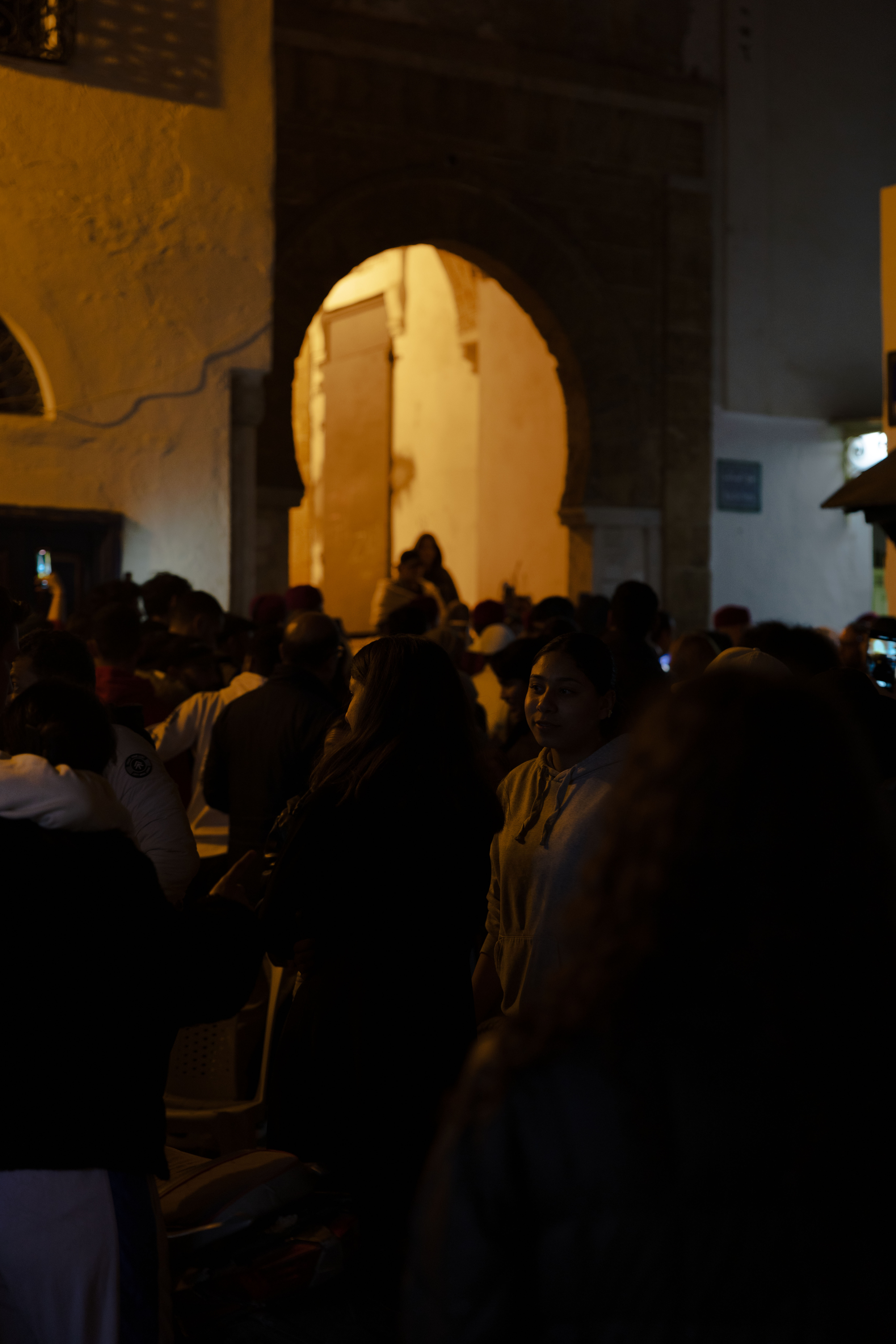
I had the pleasure of spending the past week in Tunis, Tunisia—an experience that opened my eyes to the depth of Islamic culture, particularly as someone who has spent most of their youth under the influence of Western culture. The more astute reader might notice that my visit coincided with the first week of the ninth month of the Islamic calendar: Ramadan. Before this trip, my experience with the holy month had been limited to the practices of a few Muslim friends and their families. While I found these traditions beautiful and interesting, my Western context led me to subconsciously equate them with Christian or Jewish holidays, viewing them through the lens of secularised festivities. However, it only took a few minutes in the Tunis medina on the first night of Ramadan to realise that this was far from accurate.
We were fortunate to have a very knowledgeable and passionate local guide who introduced us to the medina on our first day in the city. Among the vast breadth of knowledge he shared with us, one insight stood out in particular: while the medina, the old city, has only a few large mosques, it is home to hundreds of small ones. These smaller mosques are not for grand religious ceremonies but serve as only as places for worship for the neighbouring homes. To loosely quote our guide, Moncef: if you go to pray in your mosque at dawn and don’t see your neighbour, and they’re absent again at noon and in the afternoon, you will certainly check on them before heading to the mosque for the sunset prayer. This simple anecdote encapsulates what struck me most about Ramadan as a naive outside observer: it fosters a truly galvanising sense of community, unlike anything I have had the chance to experience before.
Moncef shared with us a personal reflection—two of his children now live in Paris, yet neither knows their next-door neighbor by name. In contrast, he proudly stated that he knows nearly everyone in the medina, a community of around 100,000 people. This deeply ingrained communal spirit, amplified during Ramadan, stands in stark contrast to the fervent individualism embedded within Western social institutions.
Perhaps it is an over-generalisation to claim that the West lacks such communal practices, but in my personal experience, I have never felt the same intensity of camaraderie as I did in the medina. This raises an important question: what is the value of this kind of community? There must be some advantage to the self-reliant individualism increasingly characteristic of Western nations. I believe there is if we are to measure success in terms of productivity. Yet, I would argue that what we gain in individual productivity, we may lose in fulfilment. Of course, this is not a direct correlation, but as illustrated in my last post, loneliness and depression are increasingly prevalent, particularly in Western societies. There are surely numerous causes for this phenomenon, but our increasing lack of communal traditions is almost certainly one of them.
In today’s world, we are supposedly more connected than ever, yet many people still feel distant and isolated. While we are able to communicate very successfully across vast distances, perhaps it's a stretch to say that we are able to connect across those same distances. Connection is more than just text or speech—it engages all the senses within a shared space and cultural practice. The internet excels at facilitating communication, but it has yet to replicate the depth of human connection. Perhaps this is where the concept of the metaverse attempts to bridge the gap, offering a more immersive shared space. But will the ability to gather in digital environments bring people closer together or only push us further apart? I personally believe that the metaverse is an eventual inevitability, so it's important then to ask what lessons we might be able to glean from those pockets of the world which seem to do connection best.